LTS Market Blog
Safe tattoo removal with an Nd:YAG laser: what should you know?
Removing a tattoo calls for a considered choice of method and an individual skin assessment. An Nd:YAG laser can effectively lighten certain pigments, but the device type alone cannot guarantee safety or complete clearance. Here is what to consider before treatment or buying equipment for a clinic in Poland.
What is an Nd:YAG laser?
Nd:YAG lasers use a neodymium-doped crystal. Tattoo treatments use very short pulses, including Q-switched systems. The 1064 nm wavelength primarily targets dark pigments; appropriately configured systems also offer 532 nm, used for colours including red. Colours do not respond equally. See DermNet’s explanation of Nd:YAG technology.
How is the pigment removed?
Laser pulses break pigment into smaller particles, which the body gradually clears. Treatment requires multiple sessions and recovery time between appointments. Session numbers and intervals are individual; complete removal in one visit should not be promised. The American Academy of Dermatology explains this process.
Safety: benefits and limitations
Treatment can cause pain, skin colour changes, burns, scarring or infection. Complete tattoo removal is not always achievable. A dermatologist’s consultation helps assess the risks. It is misleading to describe every Nd:YAG device as the “safest laser” for everyone. See the FDA’s tattoo removal information for more on risks.
Consultation and aftercare
Discuss your health, medicines and tendency to scar before treatment. Afterwards, follow individual aftercare and sun protection instructions. Plan the series around skin recovery rather than a holiday deadline. AAD guidance highlights the importance of assessment and aftercare.
Choosing equipment for a clinic in Poland
When comparing offers, ask about the specific model’s intended use, wavelengths, pulse type and manufacturer documentation. The name Nd:YAG in an advertisement does not establish whether that configuration suits your planned treatments. Request a Polish-language manual and a device demonstration.
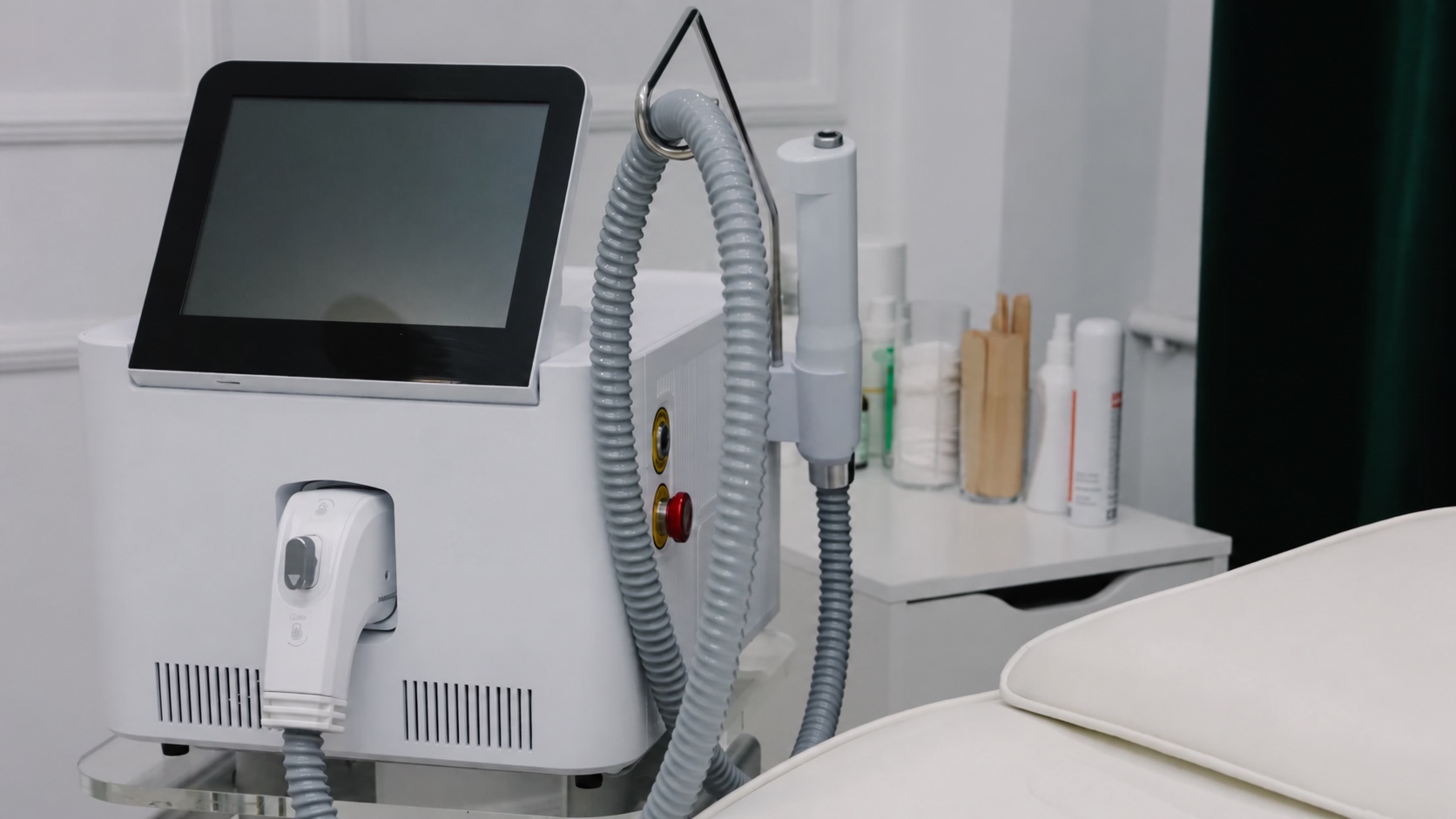
Before buying, clarify training, warranty terms, parts availability and servicing in Poland. For used equipment, request maintenance records and confirmation of handpiece condition. The article photograph is illustrative; it does not establish a particular model’s specifications or availability.
Costs and service planning
A clinic budget should include equipment, team preparation, treatment-room essentials and a maintenance reserve. Explain the price per session separately from the estimated cost of the series, without guaranteeing a visit count or result.
Compare new devices and used equipment, and explore leasing if you are considering finance. Ask LTS Market about options for your planned service. Model availability and suitability need individual confirmation.